
Steve Nash Wingspan: The Unseen 6’6″ Edge
In basketball, wingspan matters big time. At 6’3″, Nash wasn’t the tallest guard, but his 6’6″ wingspan always caught attention.
Though not monster-sized for the NBA, those long arms were a key weapon in his toolkit along with his skills and smarts.
It’s interesting to see how Steve Nash wingspan impacted his success.
What is Steve Nash’s Wingspan?
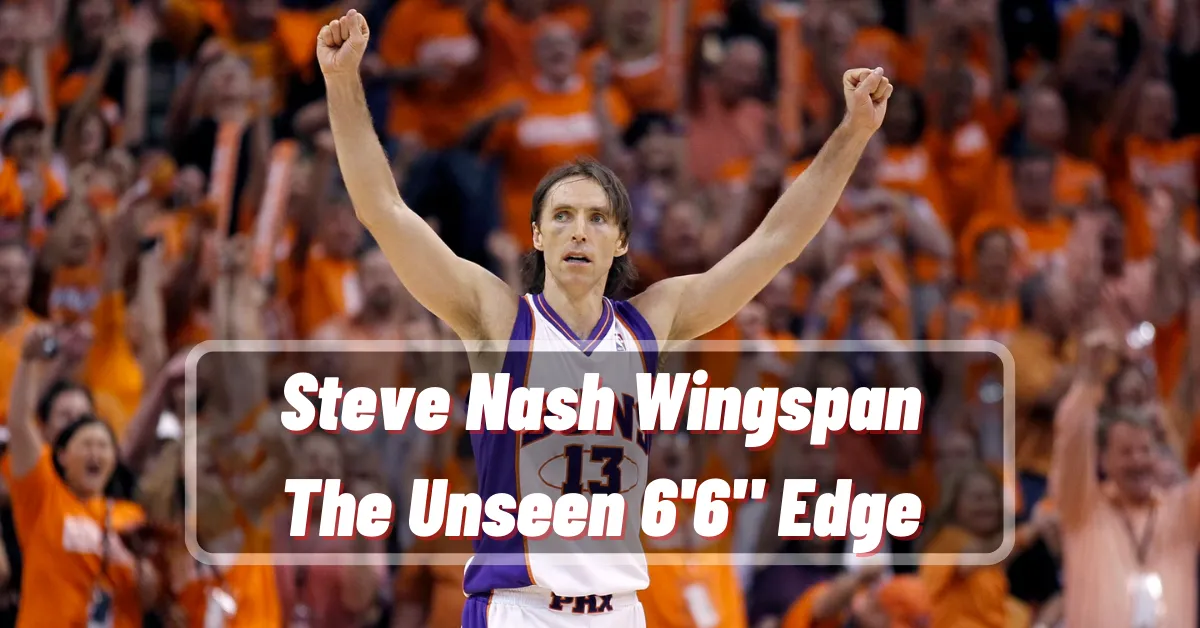
Even though he was only 6’3″ (191cm) tall, Steve Nash had a 6’6″ (198cm) wingspan. That reach, being 3 inches more than his height, gave him an edge on the basketball court.
It meant Nash could get his hands on more balls – to steal passes, grab rebounds, and make plays. Now 6’6″ isn’t crazy long in the NBA, but for Nash it worked well. Combined with his insane skills and feel for the game, it helped make him one of the best point guards ever.
His wingspan was just one part of what made him so good. While he wasn’t big, Nash used his length well, and it paid off with success.
Steve Nash’s Wingspan Compared to Other NBA Players
Research by scientist Tesla Monson shows that wingspan is key for success in the NBA.
Studying stars like LeBron, Kawhi, and Harden, she found that longer arms relate to better performance. Her big study on almost 3000 players showed those with more reach get drafted earlier – proof it matters.
Overall, in the league, taller guys tend to have bigger wing-to-height ratios too, giving them an edge on the court.
The NBA average is 1.17, with the best players hitting around 1.2. Veteran scout Carl Berman agrees, more length means defending better, grabbing more rebounds, and disrupting passing lanes.
And with positionless basketball now, versatility is everything. Players who can guard multiple spots due to their long arms are so valuable. The game now favors tall, lanky dudes who can do it all.
Compared to all this, Steve Nash’s 6’6″ wingspan wasn’t crazy long for his size. But he made the most of it, making up for his shorter height against other guards. Even without freaky length like some stars, he used his reach and smarts at an All-NBA level.
Wingspan in Nash’s Games
At 6’3″ with a 6’6″ wingspan, Nash didn’t have crazy long arms compared to other NBA stars. Still, he dominated without needing that physical edge. His unique style of play and skills are what set him apart to win MVPs.
Nash thrived by working the perimeter like a true guard, finding openings, setting up teammates, excelling at passing. That’s how he succeeded, not by overpowering guys.
His shooting form was one-of-a-kind too. He’d often release the ball from the side of his head in an unorthodox way. More than measurements, Nash’s basketball IQ and overall game are what made him great.
Defense wasn’t really Steve Nash’s specialty. His size, being on the smaller side, made him a target that other teams would try to exploit. Because of those physical limitations, the Suns often had him guard the other team’s weakest perimeter player.
Despite having quick feet from his soccer days, he still struggled with mismatches, especially against bigger dudes. His size also made it tougher to double team effectively or disrupt offenses. Even when he played good position defense, he couldn’t affect shots much.
The stats back it up too. Nash never ranked that highly in steals, defensive win shares, defensive rating, or other key categories. And the Suns were pretty bad defensively in terms of points given up while Nash was on the team.
But he did contribute some defensively by using his smarts. Nash was good at rotating to the right spot and taking charges by anticipating plays.
Captain Canada’s high basketball IQ helped mask his physical issues. He’d force some turnovers that didn’t show up in the box score. Still, most experts considered him average or slightly below average defensively, since offenses could target him.
So while his wingspan and body didn’t boost his D much, Nash used his brain to contribute. But his lack of size definitely hurt in certain matchups and team defensive concepts. He had clear challenges in that end.
Wingspan in Basketball
A player’s wingspan, how far they can reach with both arms out, is super important in basketball. It affects how they can play defense, shoot, rebound, and more.
- More reach means better D. With longer arms, players can cover more ground, block more shots, and get more steals and deflections. It’s a big advantage on that end.
- Rebounding and shooting help. A bigger wingspan lets players grab more boards, even against taller guys. And it can help shoot over shorter defenders too. More reach = more buckets.
- Wingspan shows potential. Studies show that wingspan says a lot about a player’s upside. Longer arms usually means the ability to block more shots, jump higher, and bang in the post. The “arm span to height ratio” is key.
- Changes strategy. Coaches plan defenses around wingspan now. Preventing points in the paint starts with length and rim protection.
- Overcomes size issues. Every extra inch of reach is significant. It helps smaller players compete by letting them defend bigger positions and still score inside.
So wingspan matters a ton nowadays, impacting all aspects. It’s not just a physical measurement; it affects performance for guards, forwards, and centers. Players take advantage of it on both ends to excel.
Before you go
Check out these articles below, they’ve got some cool stuff you might like:


Kenya Lee
